
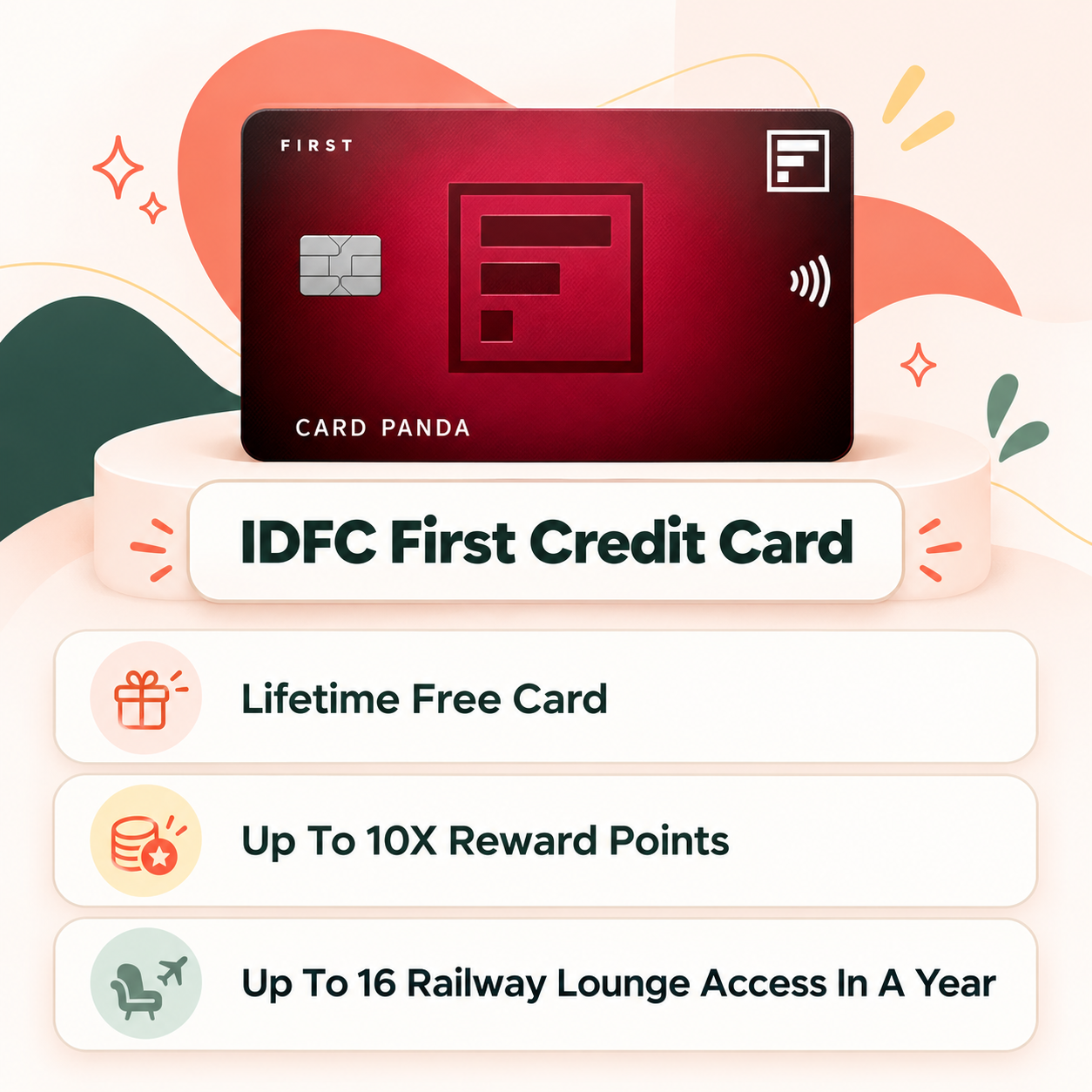
A lifetime-free credit card normally has no joining fee and no recurring annual fee under the stated offer. That removes one predictable cost, but it does not automatically make the card rewarding, inexpensive to use, or suitable for every applicant. The useful question is not simply “Is it free?” It is “What value will this card provide for the way I already spend?”
This checklist helps you verify the offer, compare rewards after exclusions, understand the other possible charges, and decide whether the card deserves a long-term place in your wallet.
First confirm what “lifetime free” means
Banks and application partners may use similar phrases for different offers. Look for an explicit statement that both the joining fee and annual or renewal fee are nil. A first-year-free card is not the same as a lifetime-free card, and a spend-based annual-fee waiver is not unconditional lifetime-free pricing.
Before applying, check whether the offer:
- Is available to every eligible applicant or only selected customers.
- Requires applying through a particular link, campaign or banking channel.
- Depends on an existing salary, savings or fixed-deposit relationship.
- Applies to the exact card variant and network you selected.
- Has an offer deadline or limited issuance period.
- Mentions a renewal fee elsewhere in the schedule of charges.
Save the application confirmation, welcome email or fee statement that identifies the offer. If the joining or renewal fee later differs from what was shown, that record makes it easier to raise a correction with the issuer.
Separate lifetime free from first-year free
The distinction is easy to miss when the application page emphasizes a limited-time promotion.
Lifetime free: No annual fee is expected for the life of the card under the accepted offer, subject to the issuer’s terms.
First-year free: The initial joining or annual fee is waived, but a regular fee can apply from the second year.
Spend-based waiver: The annual fee is charged unless spending crosses a specified threshold during the membership year.
A spend waiver can still be useful when the required spending is comfortably below what you would naturally put on the card. It becomes less attractive when it encourages unnecessary purchases or when excluded transactions do not count towards the waiver.
Compare rewards after exclusions and caps
Headline earning rates rarely apply to every transaction. Government payments, rent, wallet loads, education, fuel, insurance, utilities, EMI transactions and cash withdrawals may earn differently or may not earn rewards at all. Some cards also apply a monthly or statement-cycle cap to their strongest category.
Use your actual spending instead of the maximum advertised rate:
- List your normal monthly spending by category.
- Remove categories excluded by the issuer.
- Apply the correct reward rate to each eligible category.
- Stop counting accelerated rewards when a monthly cap is reached.
- Subtract redemption charges or other unavoidable costs.
For example, suppose a card advertises 5% cashback on one category but caps the benefit at Rs 500 per month. Spending Rs 20,000 in that category does not produce Rs 1,000 of cashback; the cap limits the monthly result to Rs 500. The effective cashback rate on that Rs 20,000 is therefore 2.5%.
You can use the CardPanda comparison tool to place annual fees and the most useful card details side by side, but always confirm the live cap and exclusion language with the issuer.
Calculate value instead of assuming free is better
A paid card can sometimes provide more net value than a lifetime-free card. The calculation should use realistic eligible spending, not the issuer’s best-case marketing example.
Consider a hypothetical comparison:
- A lifetime-free card returns 1% on Rs 3,00,000 of eligible annual spending: Rs 3,000.
- A paid card returns 2% on the same eligible spending: Rs 6,000.
- If the paid card costs Rs 999 plus 18% GST, the fee is approximately Rs 1,179.
- The paid card’s fee-adjusted value is approximately Rs 4,821.
In this simplified example, the paid card produces about Rs 1,821 more annual value. That conclusion changes if the 2% rate has a low cap, if your spending is excluded, or if redemption reduces the value of the rewards. The point is not that paid cards are better; it is that “free” and “best value” measure different things.
For a reusable method, read how credit card cashback really works and compare cashback cards using your own spending.
Check redemption value, expiry and friction
Reward points are only useful when the redemption route works for you. Two cards can award the same number of points while delivering different cash value.
Check:
- The rupee value of one point for your preferred redemption option.
- Whether points are worth less when redeemed for statement credit.
- Minimum redemption thresholds.
- Redemption or processing charges plus GST.
- Point-expiry rules and forfeiture conditions.
- Whether travel transfers require a minimum block of points.
- Whether cashback arrives automatically or requires a manual claim.
Statement cashback is often easier to evaluate because the value is expressed directly in rupees. Catalogue rewards, vouchers, airline miles and hotel points may offer good value, but only when you would genuinely use the available redemption route.
Review the whole cost picture
No annual fee does not mean no possible charges. Review the issuer’s schedule of charges for:
- Interest on unpaid balances.
- Late-payment and over-limit charges.
- Cash-withdrawal fees and immediate finance charges.
- Foreign-currency markup.
- Rent, education, utility or wallet-load fees.
- EMI conversion and foreclosure charges.
- Reward redemption fees.
- Card replacement or duplicate-statement charges.
Paying the full statement balance by the due date normally matters far more than the rewards earned. Carrying an interest-bearing balance can outweigh months of cashback, so a reward card should not be treated as a reason to spend beyond the amount you can repay.
Review lounge, movie and milestone benefits carefully
Lifestyle benefits often include qualifying conditions that are more important than the headline.
For lounge access, confirm the required spending in the previous month or quarter, the number of visits, eligible lounges, guest policy and whether a small validation charge applies. For movie offers, check the minimum booking value, monthly limit, eligible application and maximum discount. For milestone benefits, calculate whether the spending target fits your normal budget without moving purchases away from a better card.
A benefit that requires unnatural spending is not free value. Treat it as useful only when the qualifying activity would have happened anyway.
Check eligibility before creating a hard enquiry
Lifetime-free promotions can still have normal income, age, location, employment and credit-history requirements. Approval is controlled by the issuer and is never guaranteed.
Before submitting an application:
- Check the issuer’s current eligibility page.
- Confirm whether the card is available in your postcode.
- Keep PAN, address and income information consistent across documents.
- Avoid sending several applications simply to test which bank approves you.
- Check whether the product is secured by a fixed deposit or issued as an unsecured card.
If this will be your first card, start with choosing your first credit card in India before focusing on reward rates.
Give every card a specific job
A no-fee card can be useful even when it is not your highest-earning card. It might serve as:
- A first card used to establish repayment history.
- A backup for a different card network.
- A card reserved for one strong cashback category.
- A RuPay card linked to eligible merchant UPI payments.
- An older account retained for continuity of credit history.
- A card with a useful bank-specific merchant offer.
Write down the card’s role in one sentence. If you cannot identify a recurring use, the card may add account-management work without adding practical value.
Review the card every six to twelve months
“Lifetime free” describes the annual fee arrangement, not a guarantee that every benefit will remain unchanged. Issuers can revise reward rates, caps, exclusions, milestone thresholds and partner offers subject to their terms and applicable requirements.
During a periodic review, ask:
- Did I use the card’s main benefit?
- Did any reward expire unused?
- Has a cap or exclusion reduced its value?
- Does the card still have no annual fee on my statements?
- Is another card duplicating the same role?
- Are unused cards and low limits making account management harder?
If you are considering closure, first redeem usable rewards, clear pending balances and EMIs, download recent statements, stop recurring payments, and request written closure confirmation from the issuer. Consider the possible effect of closing an older account or reducing your total available credit before deciding.
A final lifetime-free checklist
Before applying, you should be able to answer yes to these questions:
- The offer clearly states that both joining and annual fees are nil.
- I understand whether the offer depends on a particular application channel.
- The card rewards categories in which I already spend.
- I checked exclusions, caps and redemption charges.
- I reviewed interest, forex, cash-withdrawal and other possible charges.
- I understand the conditions attached to lounge or milestone benefits.
- I meet the issuer’s stated eligibility indicators.
- I can explain the card’s purpose in my wallet.
- I will pay the full statement balance on time.
- I will verify the final terms with the issuer before submitting the application.
You can now browse lifetime-free and other credit cards using CardPanda’s filters. Treat the shortlist as a starting point, then verify the live issuer terms before applying.